Thursday, 23 June 2016

Tanks!

Opening up "Tanks" from Gale Force Nine, it's a cool little game with great models and a simple lightweight game system.


Not meant to be a simulation of any kind, Tanks is for 30 minutes of easy going gaming. The full colour rule book is only 22 pages and a fair bit of that is pictures helping to explain the mechanics.

Anyone who has played X-Wing the miniatures game will recognise many familiar aspects in this game from the (simplified) movement template to the crew and upgrade cards you can buy for your chosen tank(s) it's all laid out on the cards and a reference sheet, only needing the actual rule book for double checking bits.

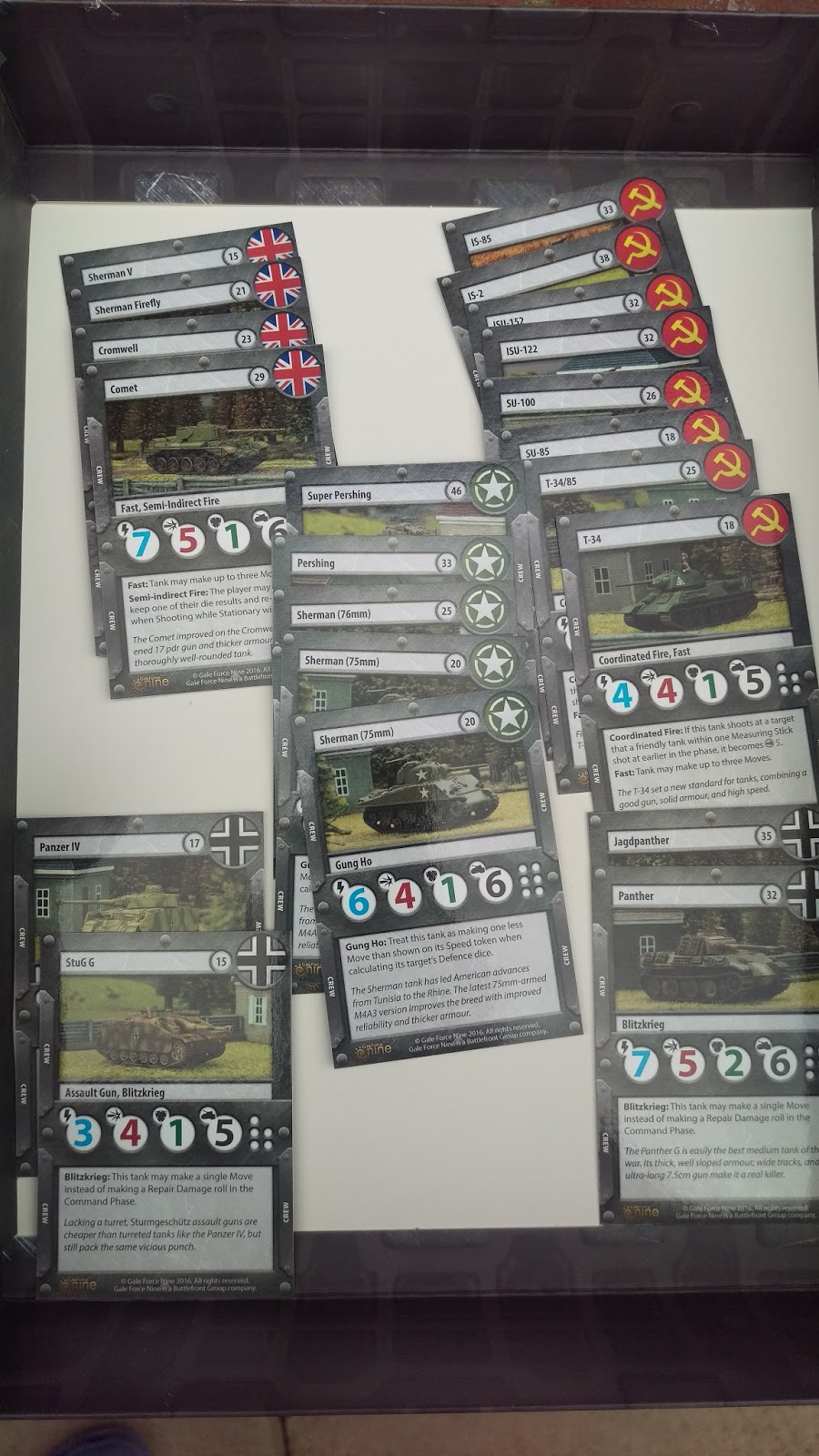
The tank cards included in the core set.

The core set comes with a load of cards for a variety of tanks, including all the possible builds from the three tank sprues included.

Damage, crew and upgrade cards.

After you have selected your tank, you can then add a variety of upgrades including crew and mechanical options for a wide variety of choice. You might be able to build a (100 point) list of 5 basic tanks or maybe 2 highly skilled and we'll equipped versions of the same vehicles.

The models in the set (and the expansions) are multi part plastic kits and will require some assembly, the Sherman and Jagd/Panther models can be built in several variations, which is great. Whilst well detailed they are basic, you won't need to build all the track and suspension assemblies!

Tokens and terrain.

The starter set also comes with a ton of tokens & counters for keeping track of things and a selection of cardboard scenery, two wooded area terrain pieces and four buildings! Everything you need to get up and running.

All this for the very reasonable price of £18 ;)

Monday, 16 May 2016

Making a monster! (well, a Tiger 1)

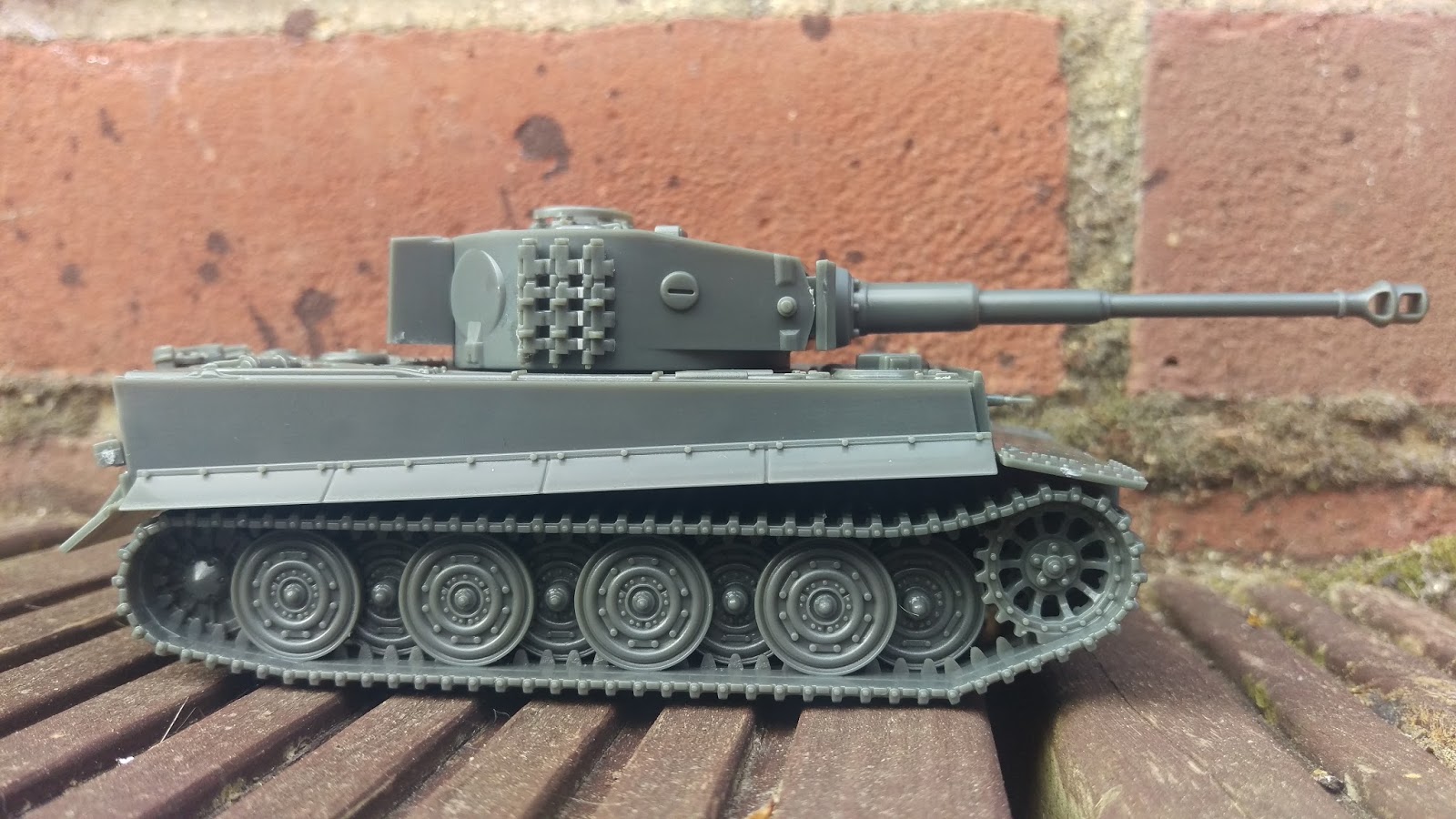
The Tiger 1 from Rubicon Models seems a decent kit, good and sturdy parts (for heavy handed wargamers) but still well detailed.


The mighty Tiger is something I've been wanting for a while, not really for use in a game as such (in Bolt Action it is hard work) but just to have the iconic tank!

Over compensate much?

The model itself was pretty easy to build with one piece tracks (very strong) and just a couple of parts to assemble all those wheels - the tank seems to have more wheels than it needs. Then the hull was two central parts, again very sturdy, with front, rear, side and top 'plates' glued onto the central box. this all went together pretty easily and looks like it will stand my using it in battle the test of time!

The profile of the beast

The turret was peculiarly in two halves (left & right) with the choice of three different turret tops to go on the top of these two, again a good solid fit. The main gun is hinged so it can be elevated and comes off the sprue in one part too.

"Aim here"

Along with the good quality and detail of the kit's structural offerings is the nice amount of options available - early, mid and late war options for wheel, turret, several ports & hatches and an optional air filtration system - all allowing you to build several different variants. The pintle mounted MG is also an option for those that want to mow down enemy infantry!


Next I need to get this thing painted!

Sunday, 8 May 2016

Rubicon Tiger 1 unboxing

I have a Rubicon models Tiger 1 Ausf E kit here to build and paint, let's see what there is to see.


One of the first things I have noticed is the impressive amount of options allowing you to build early, mid or late war variants. This includes two entire sets of tracks and running gear! The tracks are single piece with the wheels, so you can select the set with steel or the set with rubber road wheels.

The options extend to most other parts too with three different turret tops, ventilation systems and a variety of accessories that may be selected and attached as desired.

Three different turret tops

Another nice feature of the kit is that each sprue is sealed in it's own plastic bag to help keep any bits that may come loose whilst the courier is launching it from orbit.

Two complete sets of wheels & tracks

The instruction leaflet is a very well laid out piece with all parts easily recognisable and clearly numbered (including all optional parts) as well as that is some rather cool historical notes, just telling you little bits of information about the vehicle during it's tenure as the beast of the battlefield.

"From Nov 42, for Tigers sent to regions like Tunisia, Sicily, Heeresgruppe Süd and Mitte in Russia, Feifel air pre-cleaners are installed.
After Aug 43, these were no longer fitted at the factory."

I'm thinking that I'm going to enjoy building this monster!

The instruction leaflet contains loads of detail

A quick count up reveals 68 parts (including various options) so it's quite detailed and sturdy at the same time. The main hull particularly looks hardy enough to deal with clumsy gamer hands (well, mine) and the front, top and rear hull facial glue onto the central lump.

The main options include:
  • Steel or rubber road wheels.
  • Early, mid or late production turret tops.
  • Gun sight choices.
  • Optional spare track sections.
  • Three different headlight configurations.
  • Pistol port.
  • Optional Feifel filters.

A strong looking (half) hull.

So now we have seen all the bits and the great detail, I better get to building (my favourite bit) and then trying to figure out what colour scheme to go for.

Monday, 2 May 2016

A bit random!

Looking briefly at the difference between luck and skill games and hybrids.

Games like the ancient favourite - Chess evolve no luck whatsoever and a set "army" so no player has an unfair advantage over the other. On the other hand you might have a game like snakes & ladders, being a simpler game but based entirely on luck.
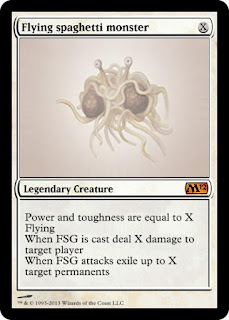
Some selections will be better than others.

Games involving only skill and judgement are very common and very old, chess is a prime example of this type of game. In each game of chess no player has an advantage (as long as their opponent knows the rules) and only decisions made by a player can effect the game. There are no random elements like die rolling that can augment or indeed scupper an action. Each player begins with the same "list" and knows exactly what they are going to face. In short the game is won or lost entirely dependent upon your decisions and actions, a killing move will not be foiled by an unlucky roll, only by a more tactically minded opponent.

At the opposite end of the spectrum, we have games based completely on luck. The traditional game of snakes and ladders is a good example of this. Again no player has any advantage (if they roll dice to see who goes first) and unlike chess, none of the players can influence their random chances of winning the game.

Then we have the bit in the middle . . .

Although this isn't a "bit" it's a vast collection of games, untold thousands of games with a vast array of options from "list building" where you normally select the forces or equipment that you are going to use and then how and where (or when) you plan to deploy your chosen list, deck or army. Then there is more often than not, a random element to the game too, a soldier might need to roll 4 or more to hit their target, an Eldrazi monster will need to be selected at random from a deck of cards.

In order to be successful at many modern games, you will have to select your forces carefully, choosing units or characters that may augment or compliment each other. Many abilities that particular units have will bolster other units or have detrimental effects on opposing forces.

Then after selecting your choice of forces, you will need to deploy them and maneuver them in an effective manor. A powerful and heavily armed spaceship will not prevail if piloted badly and it may soon be outmaneuvered and destroyed by a lesser ship flown by the better pilot.

Then there is the random bit. A great many games feature a random element, it might be quite insignificant or it might be a major part of the game. Often this will evolve regular dice, sometimes custom or specialist dice. Another popular mechanic is cards, these will invariably be shuffled to introduce randomness. Normally this is introduced to represent strengths and weaknesses amongst your troops. Your soldier has been expertly moved forward to take that headshot, aims, pulls the trigger - then you roll a 1 - what can you do?

So all you have to do is select the best ship for the job, fly it proficiently and be lucky with the dice rolls.

Or at least - better than the other guy!
Saturday, 16 April 2016

Casual or competetitive?

For all my years playing games it's become apparent to me that there are two broad categories of gamer.
  1. Casual players are kind of in it for the explosions, the cinematic experience or maybe just want to get out of the house for a few hours.
  2. Competitive players want to win, burn and/or crush all opposition and hear the lamentations of their women significant other halves.
I should point out that these two categories are very broad with a lot of crossover and hybrids of the two.

I don't care, I was enjoying it!

Over the years I've seen many heated discussions about the two incarnations and their awkward match-up in game, I've been involved in a couple myself. I believe one of the problems is (for example) that casual players prefer thematic lists or builds, which can often be suboptimal and although whilst they definitely follow the 'rule of cool' will sometimes find themselves to be less equal than others.

On the other side of the coin are the competitive players, these are the ones who'll not necessarily follow a theme or historical formation, but they'll investigate the meta of the game in question and learn to (was going to say "exploit") maximise the use of effective options or units within the available parameters.


So, who's right and who's wrong?


I don't believe either side (or any hybrid) is wrong, both are very valid approaches to the vast majority of games and both can be very rewarding to those who seek the experience they offer. They can however quite often be wrong for each other!


When competitive meets casual it can often end in tears/rage but why?

This is generally because in most game systems a competitive and well structured force will beat a poorly structured force 9 times out of 10, regardless of the skill of the commanders involved. For example (in Bolt action) a force of inexperienced partisans whilst they may be very thematic and poorly equipped with pistols, shotguns and a handful of rifles are going to find it very difficult to fight off a force of well trained and equipped German FallschirmJager veterans with their wide array of weapons including the devastating assault rifle. The partisans might be a more realistic representation of some hapless chaps during WW2 and the FallschirmJager would represent a less realistic force, but optimised within the rules. So even though both sides are supposedly equal - one is more equal than the other and quite likely to win (barring atrocious luck.)


  • This peculiar system of unbalanced fairness is present in a great many game systems, in fact any system where you might be able to choose what your deck or army is going built from.
  • For the casual player - they're going to be faced with min/maxing, rules lawyers, cheese mongers who are no fun and only here to "Win At All Costs".
  • Whereas the competitive player is facing a historical buff or reckless fool who doesn't seem to know what they're doing (and possibly just wasting your time!)
So both are right AND both are wrong in varying degrees.

I like to think that a good example of an antithesis of these phenomena is the age old game of chess, both players will have exactly the same starting lineup and limited movement options. This will show if one player has a better tactical brain than the other. Also there's no luck via dice or cards in the game so there can be no "rubbish dice rolling."

I should add now that I am a casual player in any and all games I play, I often choose a force or get a "really cool idea" and run with it, regardless of its success or lack thereof. I choose to play things and lists that I like, sometimes this can work out for me, but I must admit - it generally doesn't :)

Friday, 8 April 2016

Have you seen my mojo?

We all do it, lose our will or motivation, lose momentum or simply get distracted by something else.

Aylsham show 2015

So what can you do when you've lost your "mojo" and have that absurd combination of wanting painted models but not having the determination to actually paint them? For some this might be the painting, for others the building or it could be the daunting overwhelming of it all! Here's a few ideas . . .

1. Try something completely different!
  • Are you getting fed up of brown World War II infantry? Paint something sci-fi or brightly coloured.
  • Sick of all those eyes or similarly difficult piece? Try painting a vehicle or a building.
  • Reduced to tears gluing together hundreds of tiny arms, legs and guns? Why not something with a (single piece) fully cast miniature.
2. Google it! (Other search engines are available.)
  • As obvious as it sounds, go to whichever browser you like and do a search on the item(s) you want to work on, it just might throw up some inspirational results.
3. Lights, camera, action!
  • Go turn on the TV and see if you can find (preferably) a film, documentary or program relating to your subject matter. 

4. Just a little?
  • This often works for me, I just decide that I'm going to build/paint one thing or even half of it. Maybe do some basing or repair a broken item. Just go for something that's going to take five or ten minutes, for me this is easy and -often- triggers an enthusiastic surge.

5. Speak to your friends.
  • This is another one I find very effective. I can talk to others about their works in progress and see what they are doing (or have done) and often this will spur me into action, particularly with mass infantry.
  • Often friends will provide positive motivation if they think/realise you're struggling with getting anything done.
6. Get out!
  • This can be easier said than done, but go and visit a place of inspiration.
  • Historical gamers can find these in many forms, museums or military collections being prime examples.
  • Sci-fi inspiration can be a little trickier to find out in the real world, maybe try locating a technology or eco centre that allows visitors.
  • Fantasy players and painters might look to old local architecture for inspiration or s visit into the wild countryside (if you have any nearby.)

Saturday, 2 April 2016

My Ultra Pro Gravity Dice

I'm just doing a post to try direct video upload and I'd thought I'd show off my Ultra Pro "Gravity dice" in the process.


I've always had a bit of a thing for dice and I have quite an extensive collection of them in all shapes, sizes and colours. One of my prized sets is a matching collection of Chessex poly dice and D6's (they're very nice.)

But a while back Athena ordered in a couple of sets of some rather special dice, with a rather special price tag of £20 for the pair in a very nice magnetic storage box. These are the most expensive dice I've ever bought, but they are particularly cool!

The two dice in their open storage box (with packaging)

Here's the 'blurb' from the back of the box:
"Gravity Dice are premium precision gaming dice made from high quality, aircraft-grade aluminum. Each die has a perfect center of gravity and chamfered edges for extended rolls. Both dice are hard anodized, laser etched and designed to enhance your gaming experience."

The dice are surprisingly light, being made from aircraft aluminum (whatever that is) and have a nice feel about them, very cold and smooth. Rather peculiarly one has solid dots whilst the other has small circles denoting the "number" rolled. The case is extremely sturdy and has a very strong magnetic clasp which is very satisfying to those that like that sort of thing (me!)